Predicting Ground Reaction Forces from Motion Capture
— Machine Learning · Biomechanics · Data Analysis —
Fall 2024
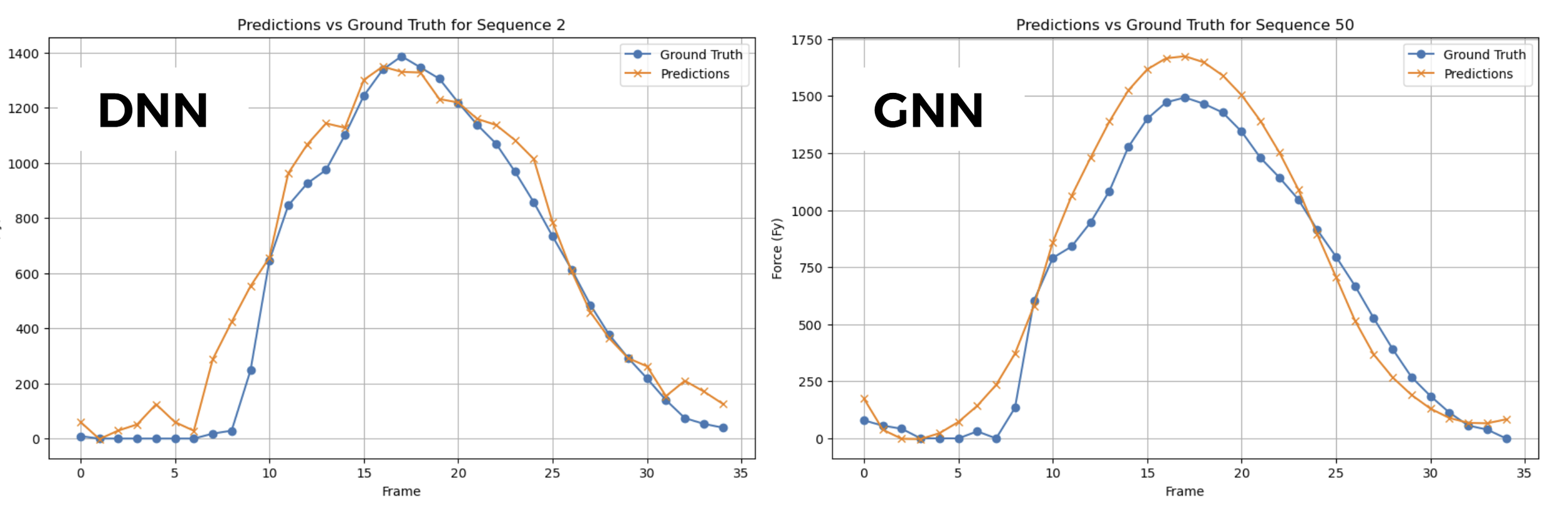
Comparison of predicted and measured ground reaction force profiles for the DNN and GNN. The DNN achieved higher overall prediction accuracy, while the GNN produced smoother force profiles.
DNN vs. GNN Force Predictions
Ground reaction forces are an important measure in gait analysis but traditionally require force plates and laboratory equipment to measure. For this project, I worked with a teammate to develop machine-learning models that predict a runner's vertical ground reaction force directly from 3D motion-capture data. We combined and standardized two public running-biomechanics datasets, developed a data-processing pipeline to identify and extract individual foot strikes, and trained and evaluated deep neural network and spatial-temporal graph neural network models across different running conditions. Our best models achieved R² values of approximately 0.95, demonstrating the potential to eventually estimate running forces from video-based pose data without force plates.
Analysis & Results
Standardizing Motion Capture Data
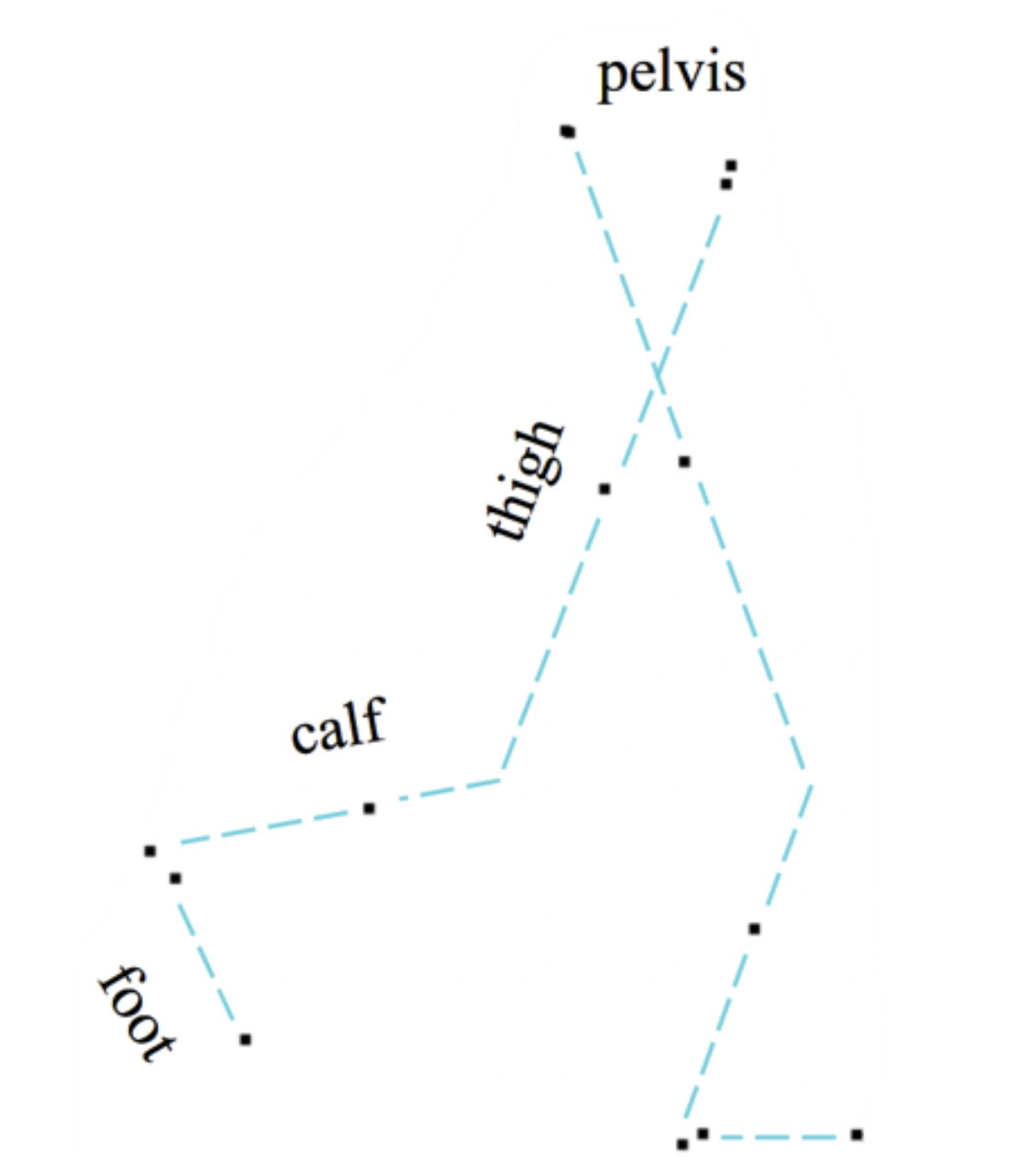
Standardized motion-capture data from two running datasets to a common set of 14 body markers and coordinate system, enabling the datasets to be combined for model training.
Effect of Motion-Capture Sequence Length
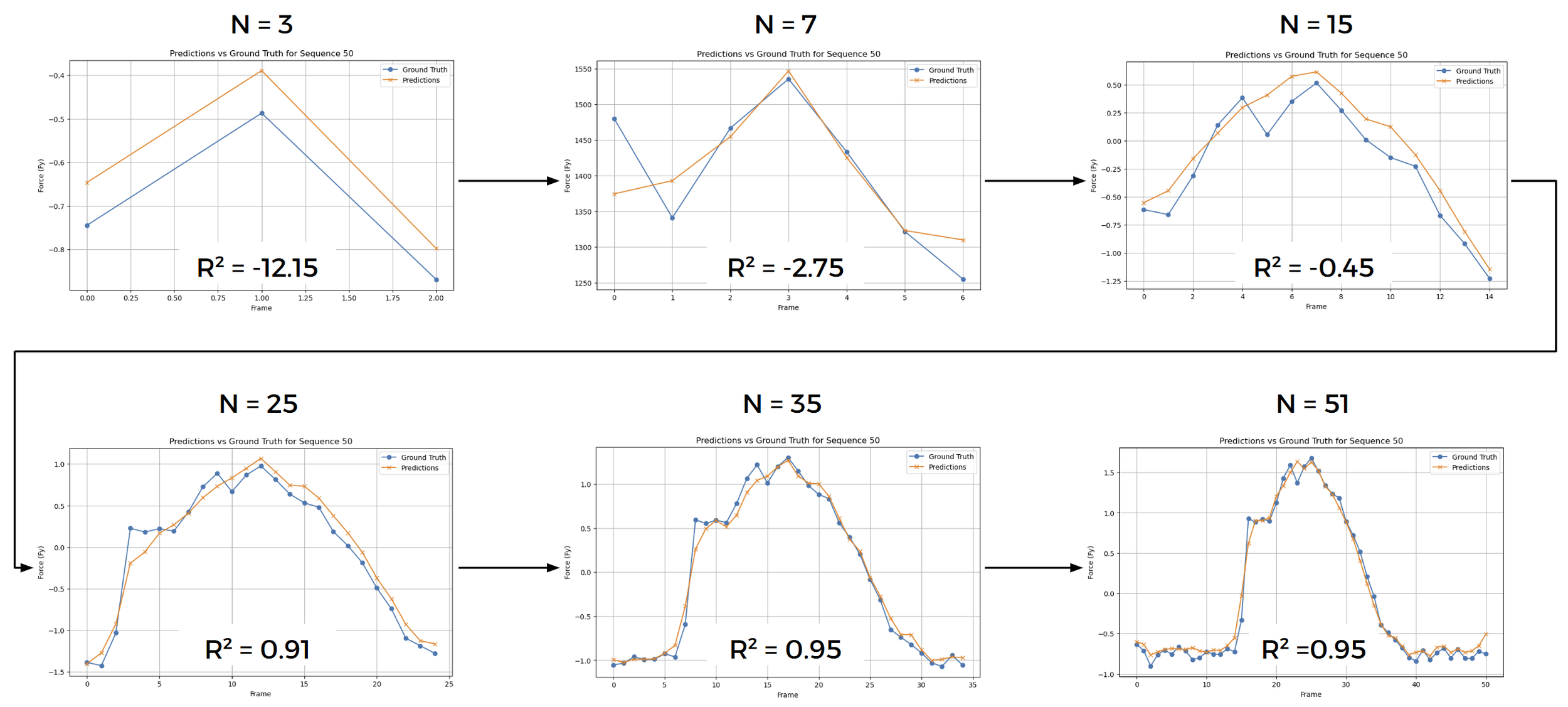
Tested increasing input windows from 3 to 51 frames to evaluate how temporal context affected force prediction. Longer sequences improved reconstruction of the ground reaction force profile, with performance leveling off around 35 frames.